

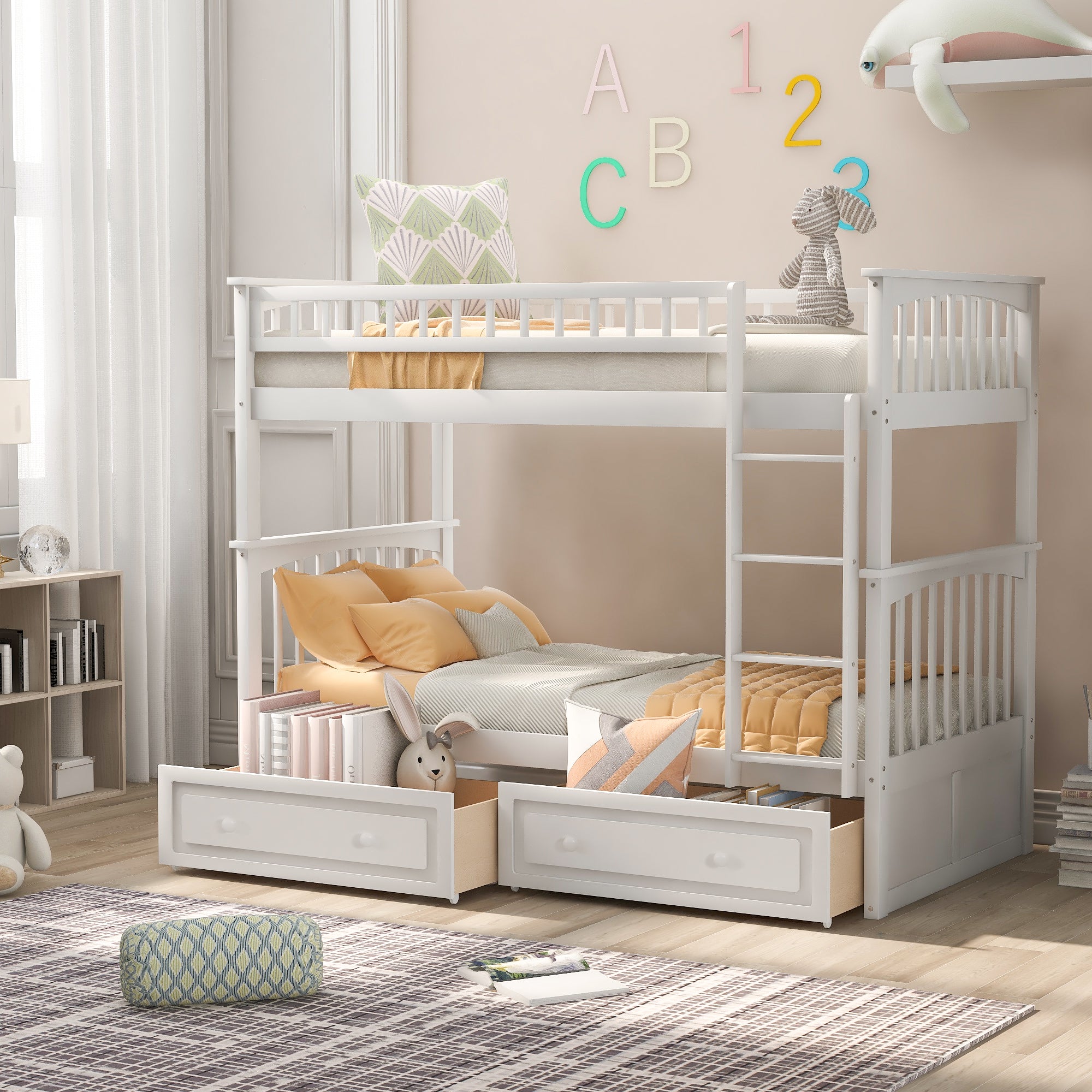
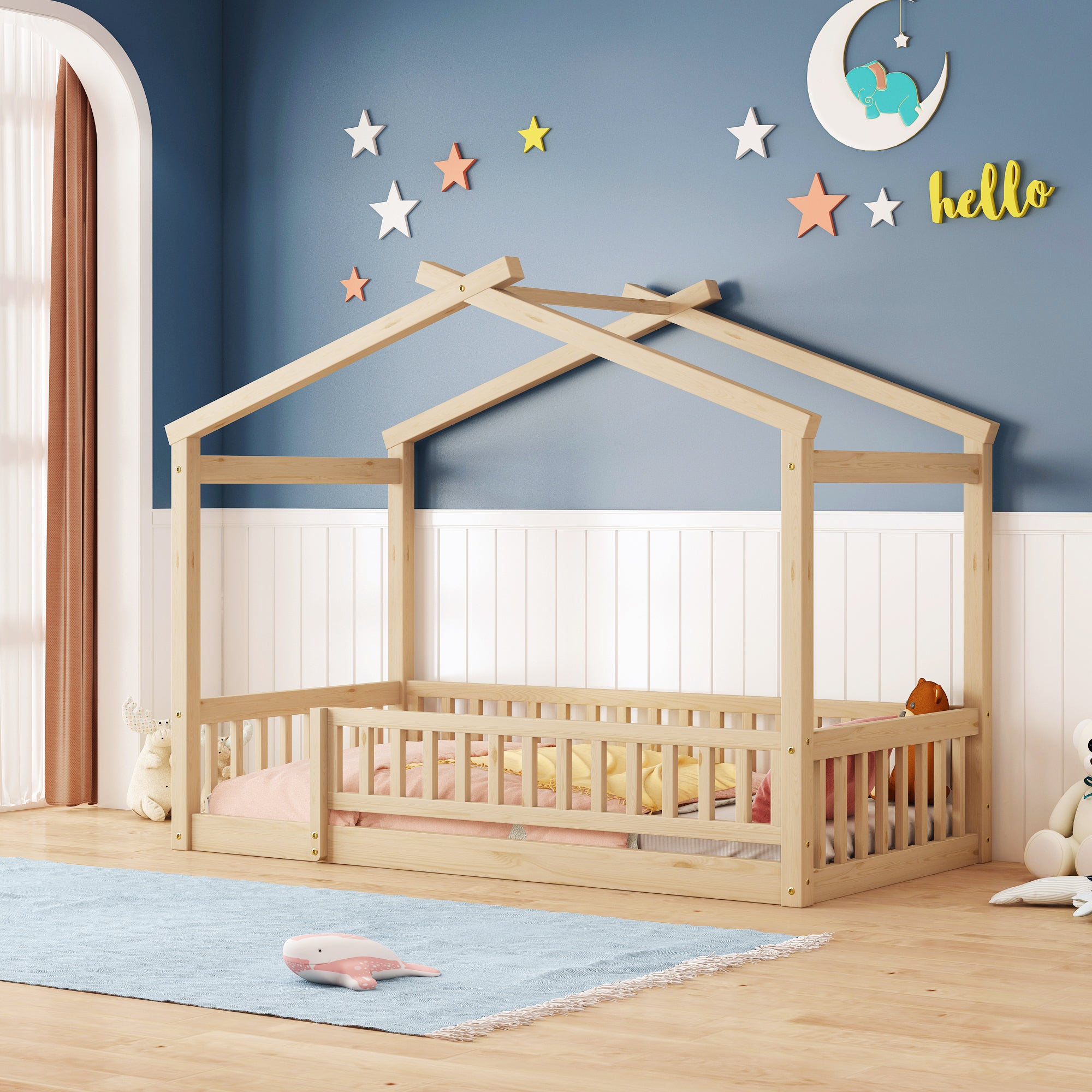






































































A bunk bed is bought on floor plan, not on looks. Four measurements decide whether the one you like will work in the room.
1. Ceiling clearance — the one that rules rooms out
Allow at least 30 inches of clear space above the top mattress so a child can sit up without hitting the ceiling. Work it out as: ceiling height − assembled bed height − mattress thickness. Then check what is actually on the ceiling. A fan or a pendant light over the top bunk is a genuine hazard, not a detail.
House-frame bunks add a pitched roof — often more than a foot over a plain bunk. Measure to the roof peak, not the mattress. See house bunk beds.
2. The top-bunk mattress rule
Top bunks usually cap mattress thickness at around 6 inches. This is not a comfort preference — the guardrail has to stand meaningfully proud of the sleeping surface. A 10-inch mattress on a top bunk raises the child above the rail and defeats it. Lower bunks are more relaxed, typically 8 inches or more.
Every bunk we list states its recommended thickness for each level.
3. Weight capacity, per level
Most of our frames are rated 400 lb per bed. That figure matters more than whether the frame is metal or wood — a well-engineered metal frame and a solid pine frame at the same rating are equally safe. Check the rating if an adult will ever sleep on or sit on the top bunk.
4. Whether you need a bunk at all
- Two sleepers, tight floor: a standard twin over twin bunk. Look for convertible frames — they separate into two free-standing twin beds when the children outgrow sharing, so you buy once.
- One sleeper, need the floor back: a loft bed. You are buying usable space underneath — desk, wardrobe or storage — not a second bed.
- Three sleepers: a triple bunk. L-shaped versions use a corner and keep ceiling demands modest; stacked versions need real ceiling height.
- Adults, occasional use: a Murphy wall bed instead — the room stays an office by day.
Before you order
- Measure your narrowest doorway, stair turn and lift — these ship in one or two long cartons.
- Plan for two people and on-site assembly; no box spring is required on any of them.
- Check the delivery fee on the product page. Large frames ship at $39 flat delivery, charged once per order regardless of quantity.
Four we would actually recommend
These are the frames we keep in depth and know the numbers for. Each link goes to the full specification, including the mattress-thickness limit for its top bunk.
- Twin Over Twin Convertible Metal Bunk Bed — the default choice for a shared kids' room. 77.4 × 40.35 in. footprint, 61.81 in. tall, 400 lb per bed, and it separates into two free-standing twin beds when sharing ends, so it survives the next room change.
- Twin Wood House Bunk Bed with Slide — pick this only if you have the ceiling for it: the roof peak is 81.8 in., and the slide needs 48.8 in. of clear landing space beside the bed. Pine and MDF, 400 lb per bed.
- Triple Twin L-Shaped Metal Bunk Bed — three sleepers without the ceiling height a stacked triple demands. It occupies a corner: 91.73 × 77.17 in. across two walls, 66.93 in. tall. Includes a built-in side table.
- Twin XL over Queen Bunk Bed — the one that suits mixed ages or an adult below. Queen underneath, Twin XL on top, 84.7 × 63.7 × 58.3 in., 300 lb upper / 400 lb lower, 8–10 in. maximum mattress on both berths.
More layouts: twin over twin, house frames, triple bunks, queen and adult bunks, loft beds.