




















































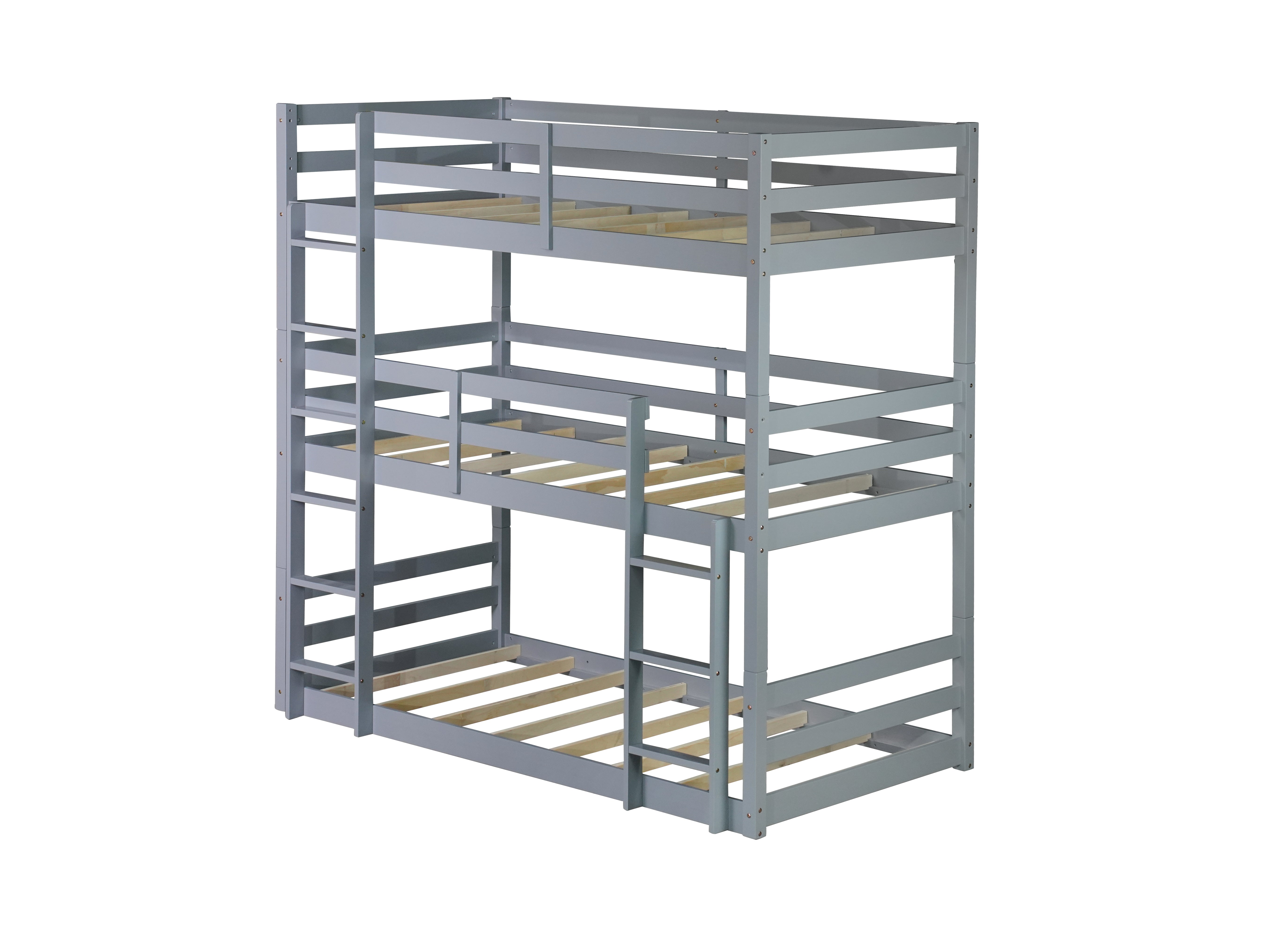
A triple bunk bed can mean three permanently stacked sleeping levels, a two-level bunk with a pull-out trundle, or a convertible frame that separates as room needs change. The best layout depends on how often the third bed will be used, who needs each mattress size, the finished ceiling height, and whether storage or future flexibility matters more than the smallest footprint.
Shop triple and convertible bunk beds, or compare queen and adult bunk beds when two full-width sleeping surfaces are the priority.
Quick answer: which bunk-bed layout fits your room?
- Choose a three-level bunk when three beds will be used regularly and vertical space is available.
- Choose a bunk with a trundle when the third mattress is mainly for guests and can be stored under the lower bed.
- Choose a convertible bunk when you may later need separate beds instead of a permanent stacked layout.
- Choose built-in drawers or storage stairs when floor storage matters as much as the number of beds.
- Choose by exact mattress sizes when sleepers need more than twin-width surfaces; “sleeps three” does not mean every level has the same size.
Current triple and convertible bunk-bed comparison
On a small screen, swipe the table horizontally to compare all columns. Capacities and mattress guidance below are supplier-listed for the linked model.
| Current model | Sleeping layout | Overall size | Listed capacities | Best starting point for |
|---|---|---|---|---|
| Twin XL, Full XL & Queen triple bunk bed | Three stacked levels: Twin XL, Full XL, Queen | 83 × 61.8 × 74 in | 200 / 250 / 350 lb | Three different mattress widths in one vertical footprint |
| Detachable triple-twin wood bunk bed | Three stacked twin beds; separates into three twins | 78.6 × 43.4 × 76.8 in | 200 lb per level | Equal-size mattresses and future room-layout flexibility |
| House bunk bed with slide, trundle & stairs | Twin over twin plus pull-out twin trundle | 94.5 × 45.5 × 94 in | 300 / 300 / 300 lb | Three twin sleeping surfaces with play and stair-storage features |
| Twin-over-full wood bunk bed with trundle | Twin over full plus pull-out twin trundle; separates into two beds | 79.3 × 57.1 × 61.3 in | 300 / 350 / 300 lb | A lower three-sleeper layout with a wider lower mattress |
| Convertible twin-over-full wood bunk bed | Twin over full; separates into two platform beds | 79.3 × 57.1 × 61.3 in | 300 / 350 lb | Two sleeping surfaces without a trundle or built-in drawers |
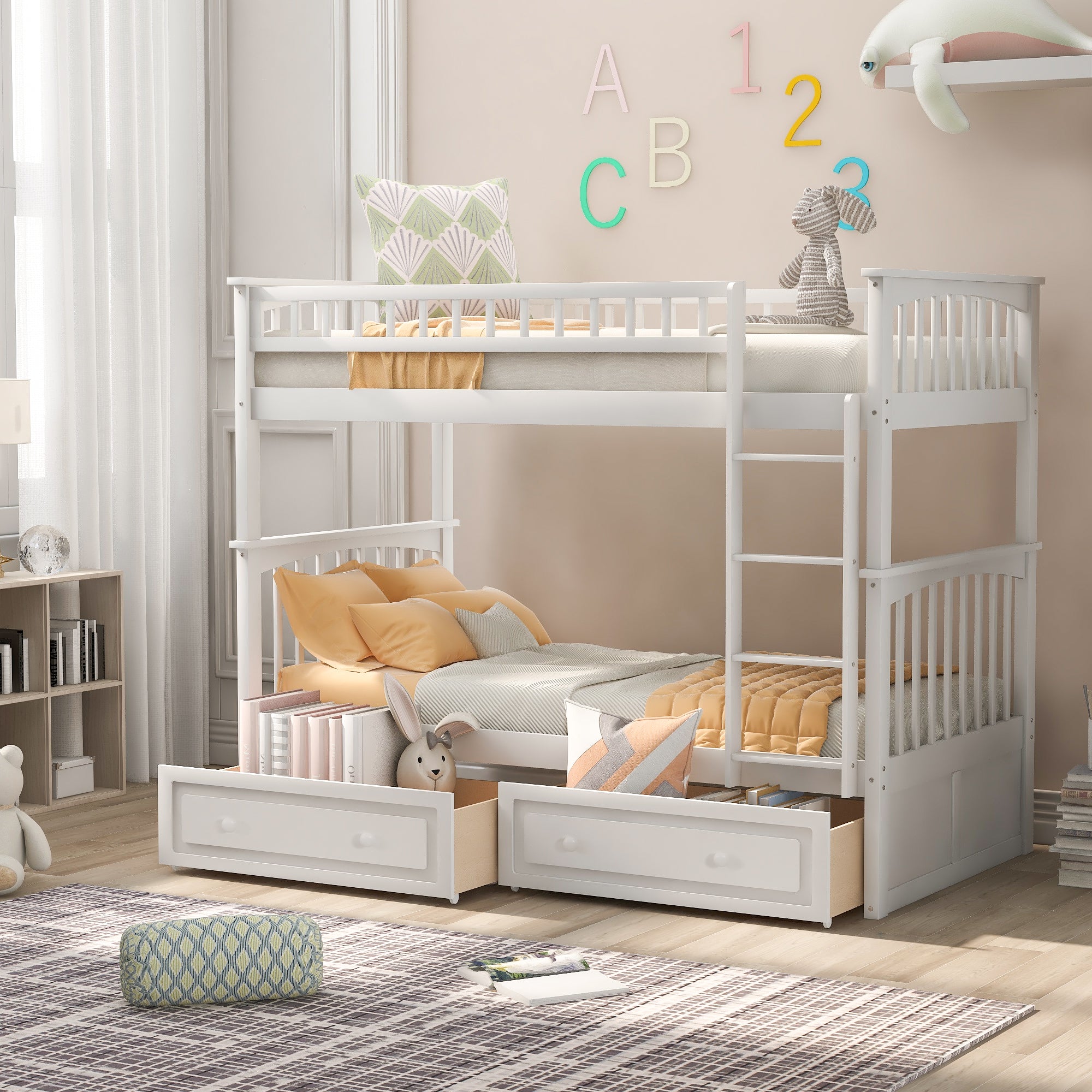
| Twin-over-twin wood bunk bed with drawers | Twin over twin; separates into two twins | 77.3 × 43.5 × 61.3 in | 250 lb per level | Equal-size beds with two rolling storage drawers |
| Convertible twin-over-full bunk bed with drawers | Twin over full; separates into two beds | 79.7 × 57.5 × 61.2 in | 400 / 400 lb | A full lower bed, separable layout and two storage drawers |
1. Decide whether the third bed is permanent or occasional
A three-level bunk keeps all three mattresses ready at the same time. This can work well when three people use the room regularly, but it requires more vertical clearance and makes every sleeping level part of the permanent footprint.
A trundle stores the third mattress beneath the lower bunk. It keeps the frame lower, but the trundle needs open floor area when pulled out. Measure that extended sleeping position, not only the closed-bed footprint, and confirm that nearby doors, drawers and walking routes still work.
2. Compare mattress sizes, not only the number of beds
The current choices range from three equal twin surfaces to a Twin XL/Full XL/Queen stack. A twin-over-full layout gives the lower sleeper more width, while a queen lower level uses substantially more room. Assign each sleeper to a specific level before choosing, then check that level’s listed capacity and mattress guidance.
3. Measure ceiling height and the complete room
Frame heights in the current collection range from about 61 inches to 94 inches. Add the upper mattress when judging headroom, and account for ceiling fans, lights, sloped ceilings and the space needed to climb safely. The 94-inch house-bed frame is a very different ceiling decision from a 61.2-inch convertible frame.
Also measure the complete footprint, ladder or stair position, slide clearance, the opened trundle, baseboards and a practical walking route. A narrow bed may still need significant side clearance because of stairs or a slide.
4. Treat mattress thickness as a safety-related model specification
The U.S. Consumer Product Safety Commission explains that upper bunks require guardrails and that the tops of those guardrails must be at least 5 inches above the top of the mattress. Its rules and warnings also address entrapment hazards and state that children under age 6 should not use the upper bunk. Read the official CPSC bunk-bed guidance.
Use the mattress size and thickness specified for the exact model and sleeping level. A thicker upper mattress can reduce the effective height of the guardrail. Do not transfer mattress guidance from one product to another simply because both are described as bunk beds.
5. Decide how much future flexibility you need
A detachable triple-twin frame can become three individual twin beds. The current convertible twin-over-full and twin-over-twin choices can become two separate beds. This matters when children move rooms, a shared bedroom becomes a guest room, or the ceiling no longer suits a stacked layout.
Check the product page for the exact separation feature. A trundle adds a third mattress but does not automatically mean the upper and lower bunks separate.
6. Compare storage features honestly
Rolling drawers use the space below the lower bed for bedding or room items. Storage stairs can make climbing feel different from a ladder and add compartments, but they also increase the total footprint. A trundle occupies the same under-bed zone that drawers might otherwise use, so prioritize either a stored third mattress or dedicated under-bed storage.
7. Plan delivery and assembly before ordering
Every current product in this comparison requires assembly. Six models list two cartons; the house bed with slide, trundle and stairs lists four. Cartons may arrive separately. Measure the narrowest doorway, hall turn, stair landing and elevator, keep the assembly area clear, and compare every delivered carton with the included parts list before beginning.
- Assemble on a level floor in the intended room where practical.
- Use the supplied instructions, slats and fasteners.
- Install and retain all required upper guardrails.
- Recheck connections after assembly and periodically during use.
- Keep the model information and instructions for future reference.
Triple and convertible bunk-bed checklist
- Number of regular and occasional sleepers confirmed.
- Mattress size assigned to each sleeping level.
- Frame height, upper mattress and ceiling clearance measured.
- Ladder, stairs, slide and opened-trundle clearance checked.
- Listed capacity and mattress thickness checked for each level.
- Doorway, hall, stair and elevator delivery route measured.
- Carton count and assembly plan confirmed.
- Future need for separate beds or storage considered.
Frequently asked questions
What is the difference between a triple bunk bed and a bunk bed with a trundle?
A three-level bunk keeps three mattresses stacked and ready. A bunk with a trundle normally has two stacked beds plus a third mattress that rolls out from beneath the lower bunk. Both can sleep three, but their height and required open floor area differ.
Can a triple bunk bed separate into individual beds?
Only when the exact model states that it can. The current detachable triple-twin model separates into three twin beds. Several twin-over-full and twin-over-twin models separate into two beds, while a permanently stacked metal triple bunk should not be assumed to detach.
How much ceiling height does a triple bunk bed need?
There is no universal number. Start with the listed frame height, add the specified upper mattress, then allow practical headroom and clearance from fans, lights and sloped ceilings. Current frame heights in this comparison range from 61.2 to 94 inches.
What mattress thickness should I use on the upper bunk?
Use the exact product-page recommendation for that model and level. Current upper recommendations range from 6 inches or less to 6–8 inches. A thicker mattress can reduce effective guardrail height.
Are bunk-bed mattresses included?
The current products in this guide do not include mattresses. Confirm the live product page and selected configuration before ordering.
Will all cartons arrive together?
Not necessarily. Current models ship in two or four cartons, and separate cartons can arrive at different times. Keep the carton labels and check all parts before assembly.
Match each bunk to the right mattress
Size names and thickness limits can change by sleeping level. Compare Twin, Twin XL, Full, Full XL and Queen bunk-bed mattress guidance before buying mattresses for the frame.
Measure your room before choosing
Checking a frame height is only the first step. Use our triple bunk-bed room measurement guide to plan ceiling height, trundle and drawer clearance, overhead obstacles and the delivery route.
Related bunk-bed resources
- Triple & Convertible Bunk Beds
- Queen & Adult Bunk Beds
- Queen Over Queen Bunk Beds for Adults: Size, Weight & Mattress Guide
Compare all current triple, trundle and convertible bunk beds
Specifications, prices and availability can change. Use the live product page as the final source for the selected model, package contents and availability.